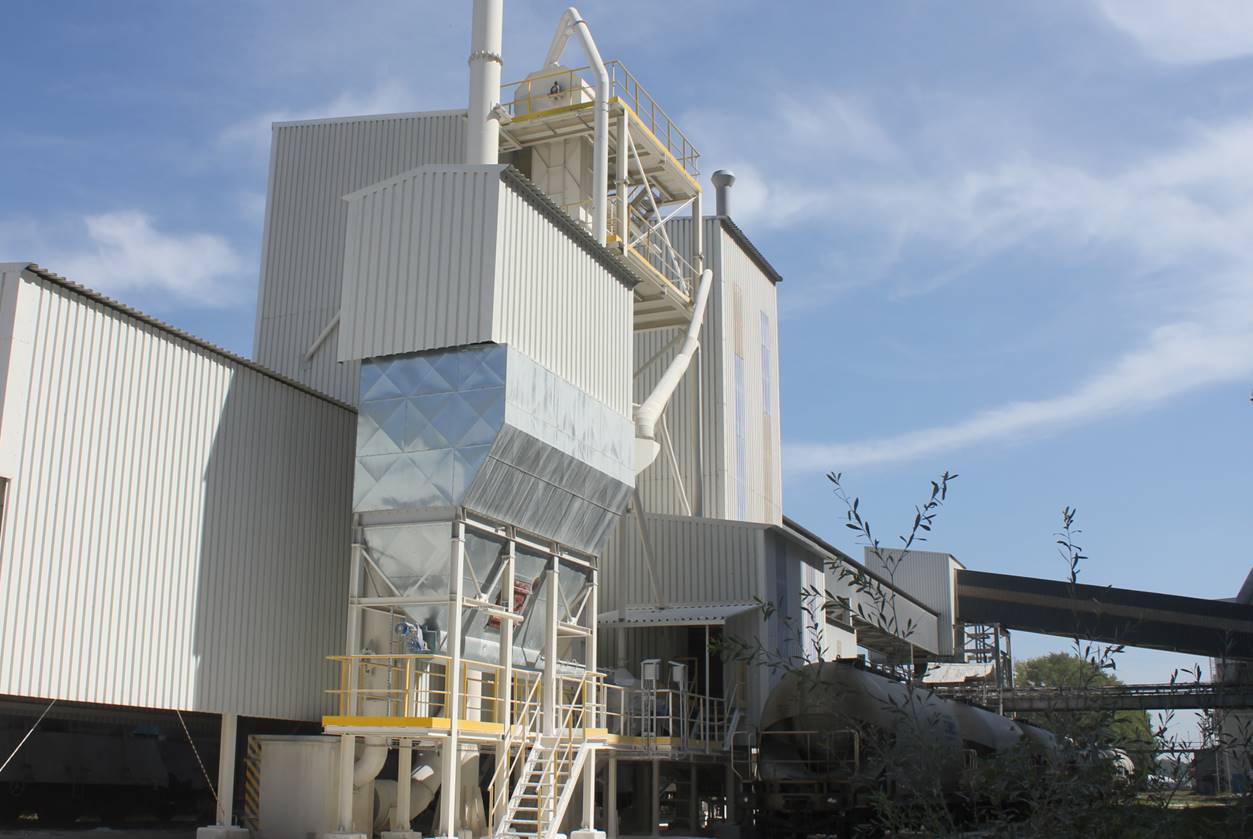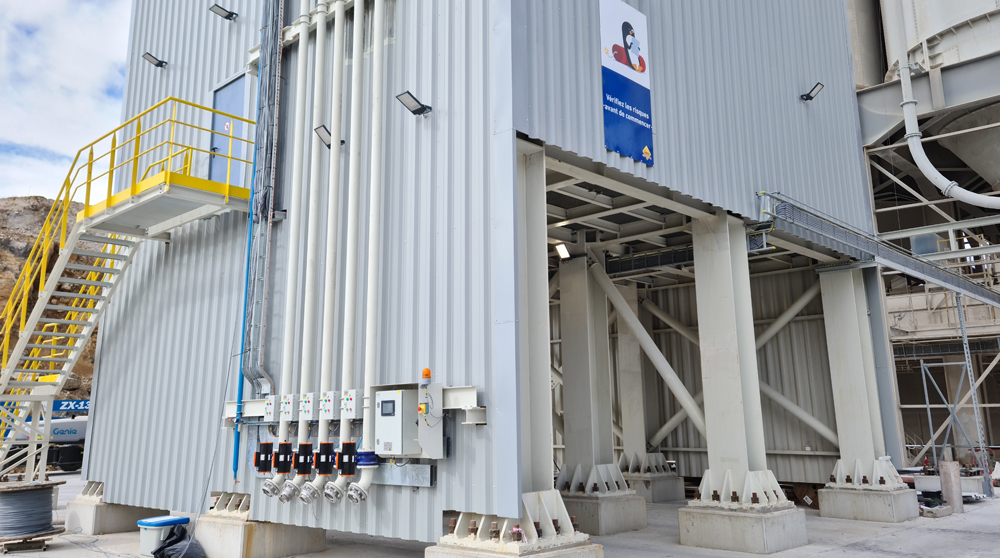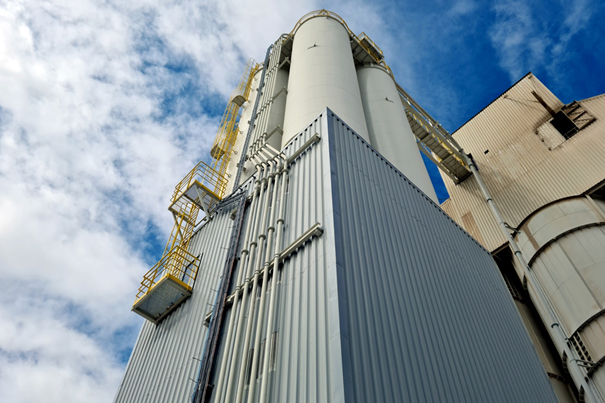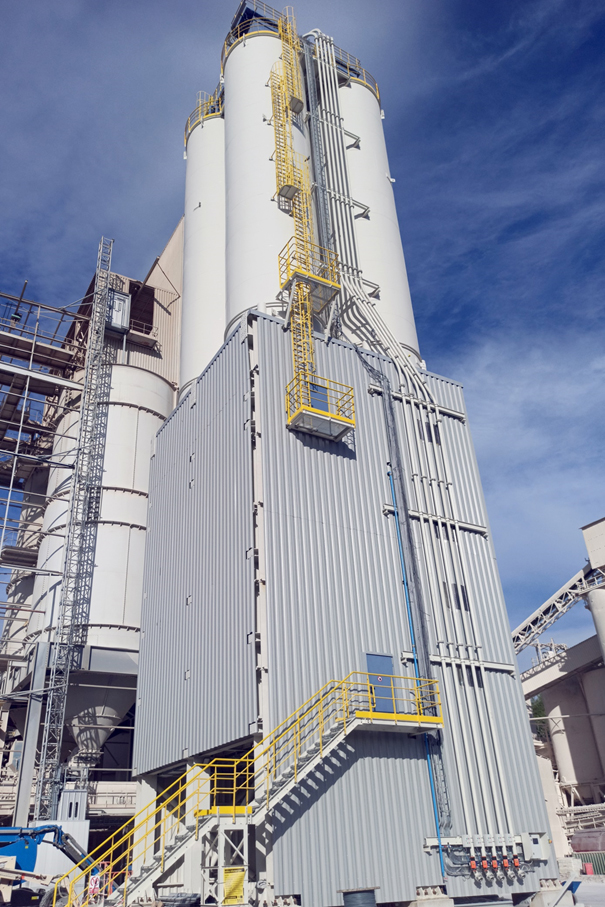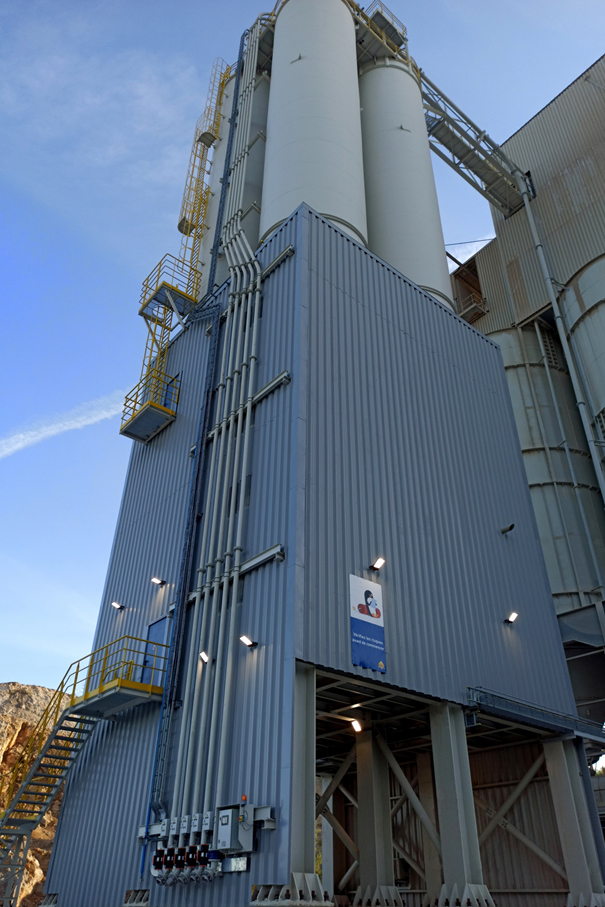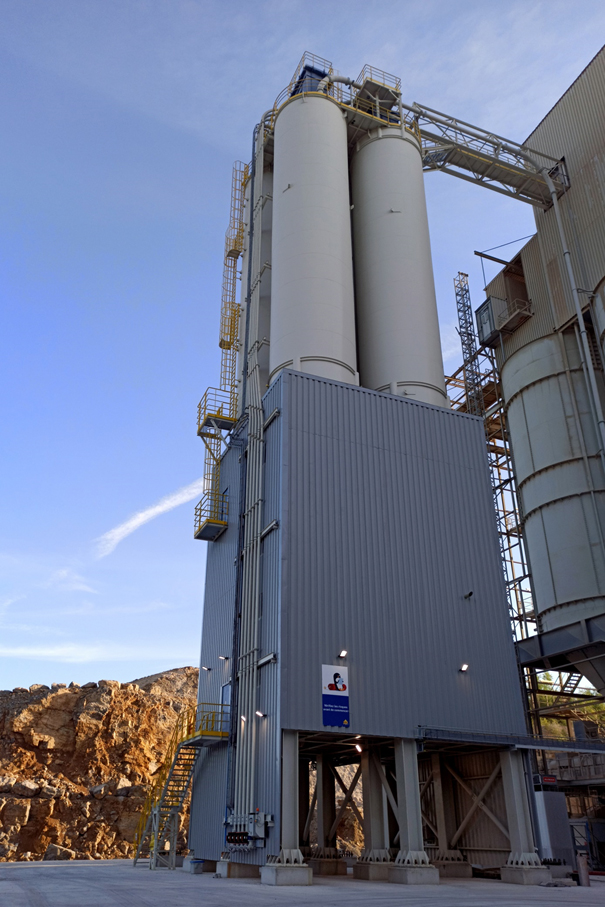


Biko Tech installation for the production of five-component mixtures of loose materials, intended for loading road tankers (without the need to use buffer tanks for ready product). The installation allows the production of any quantity composition, in any proportions, of five-component mixtures of bulk and powder products.
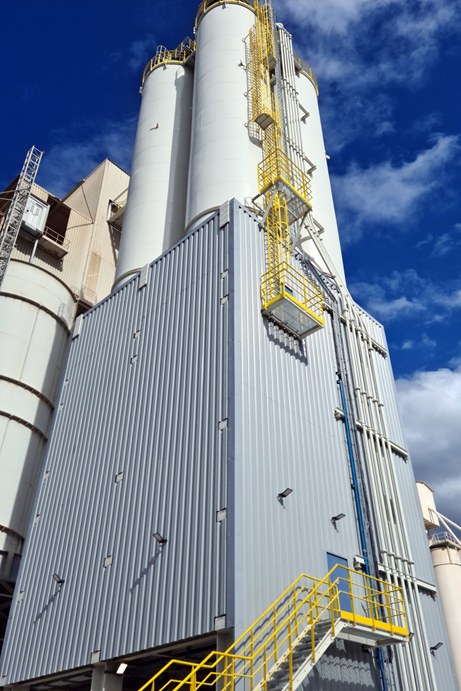
The installation allows the production of mixtures for road construction. Depending on the selected recipe, the finished product may consist of: lime, cement slag, fly ashes and gypsum or other mixtures of loose materials.
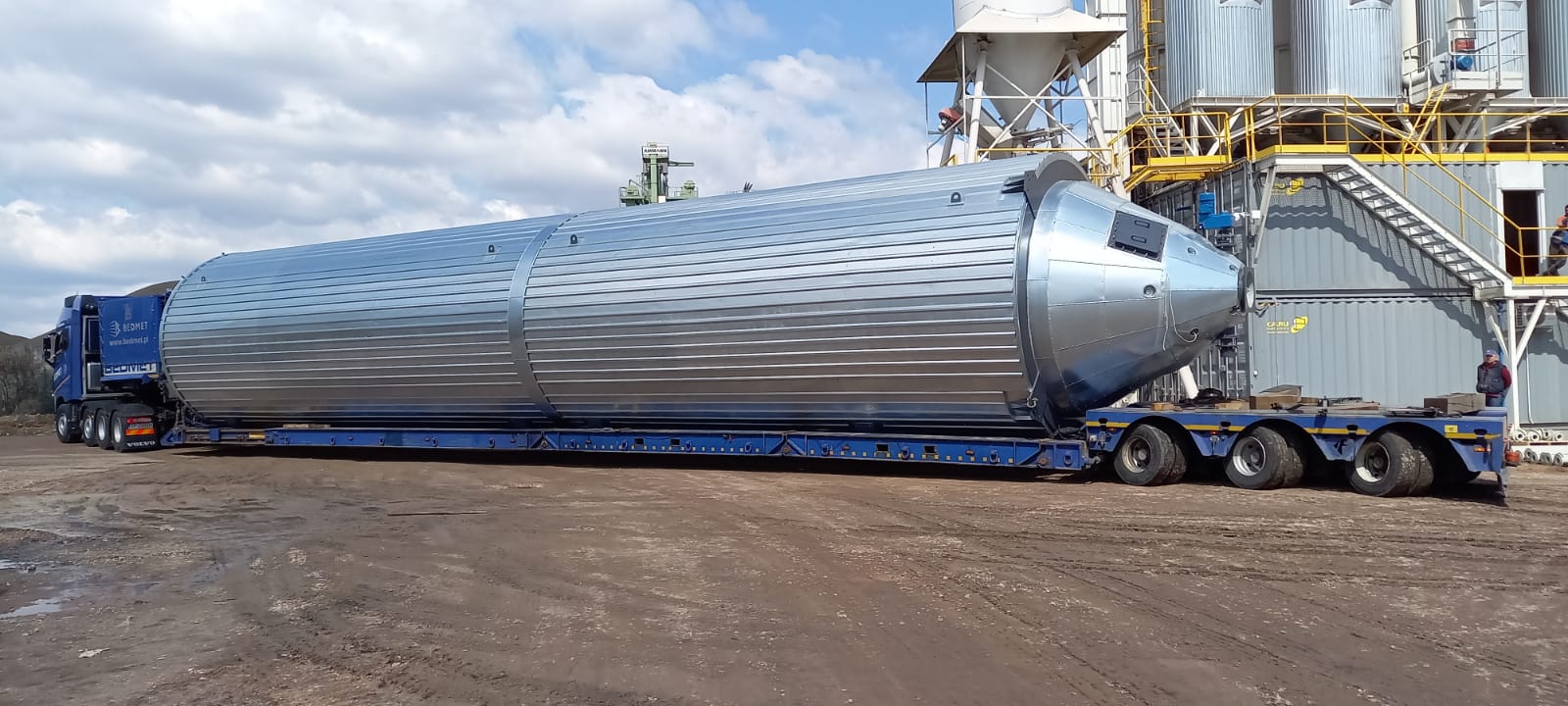
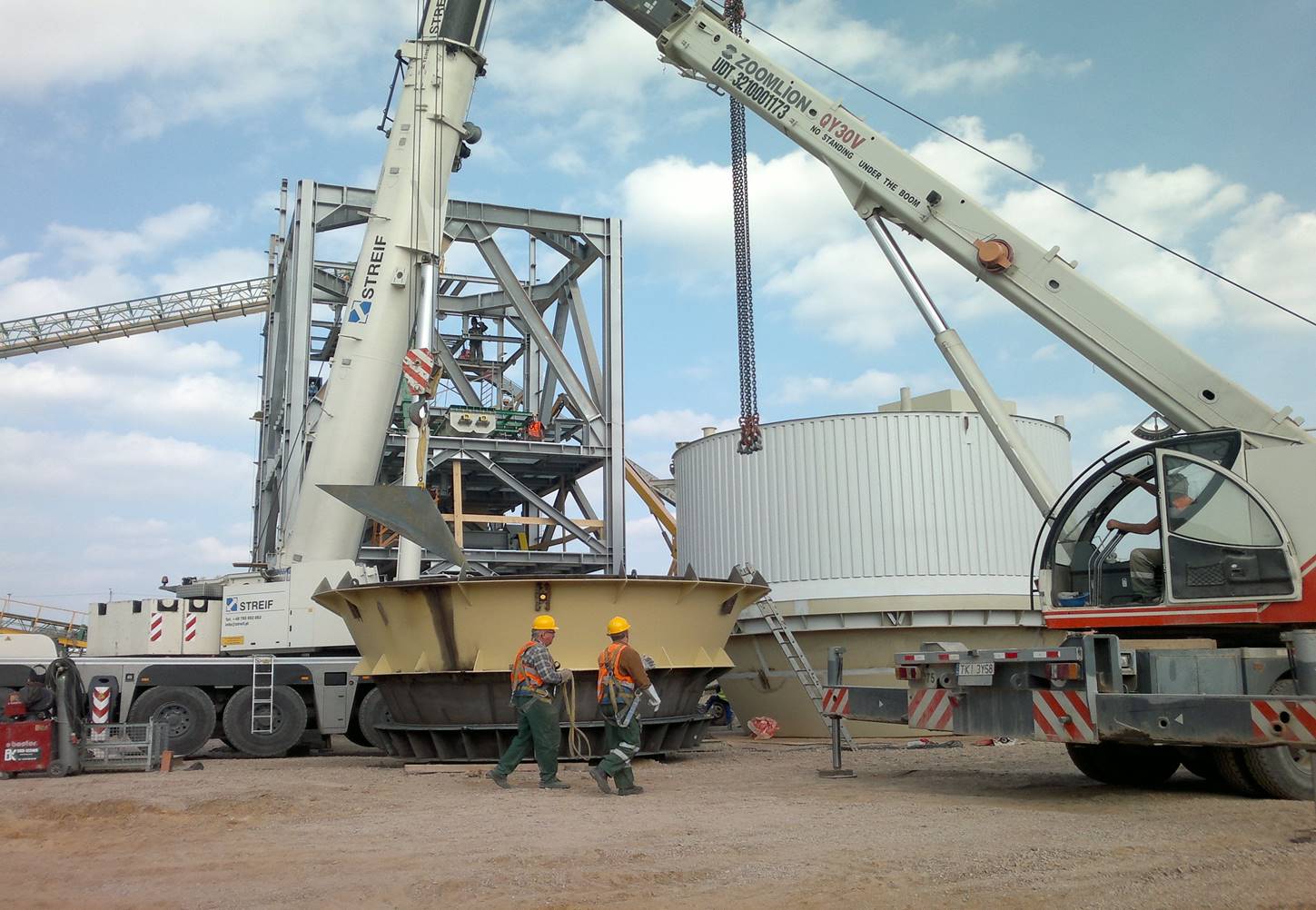
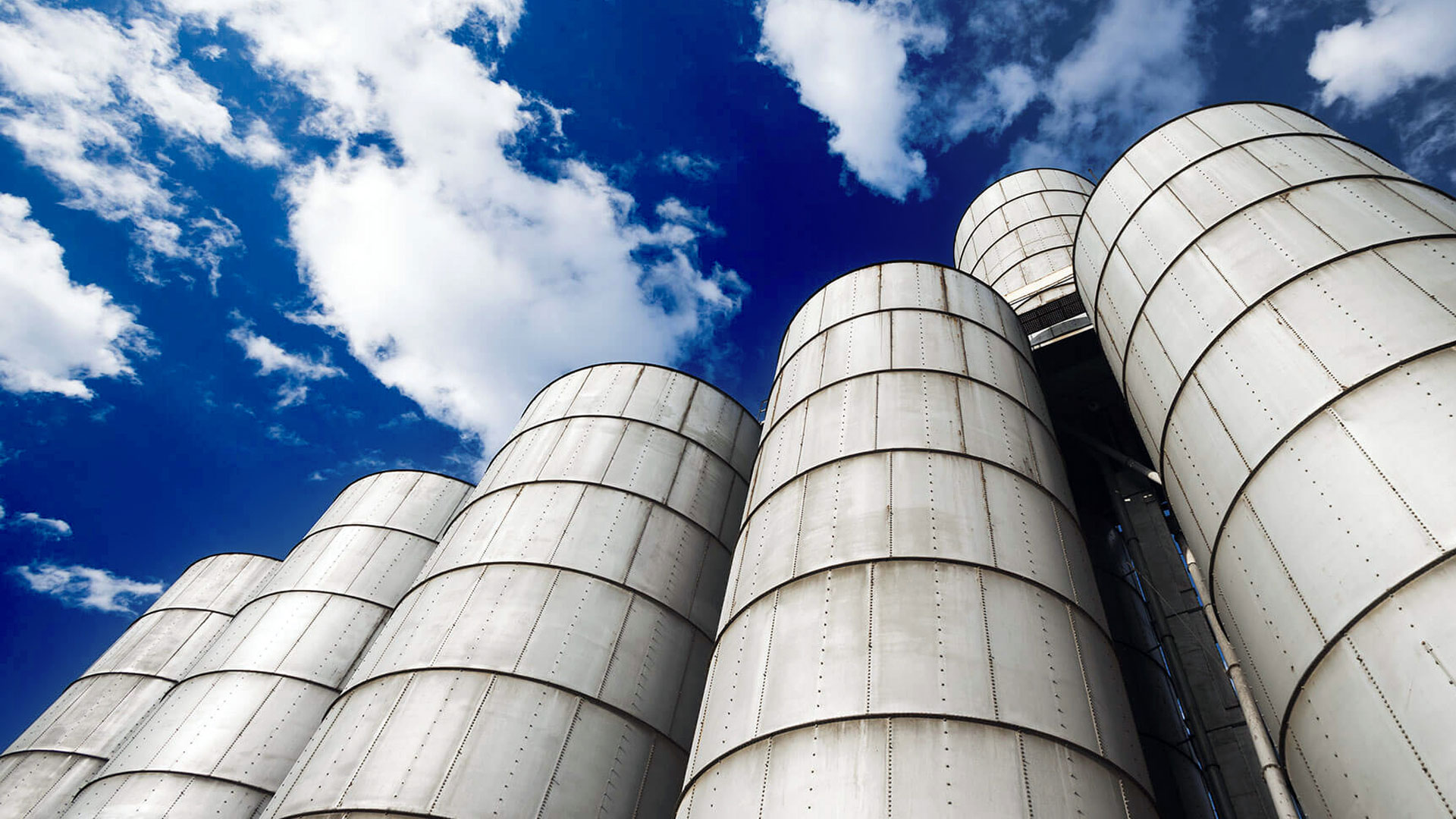
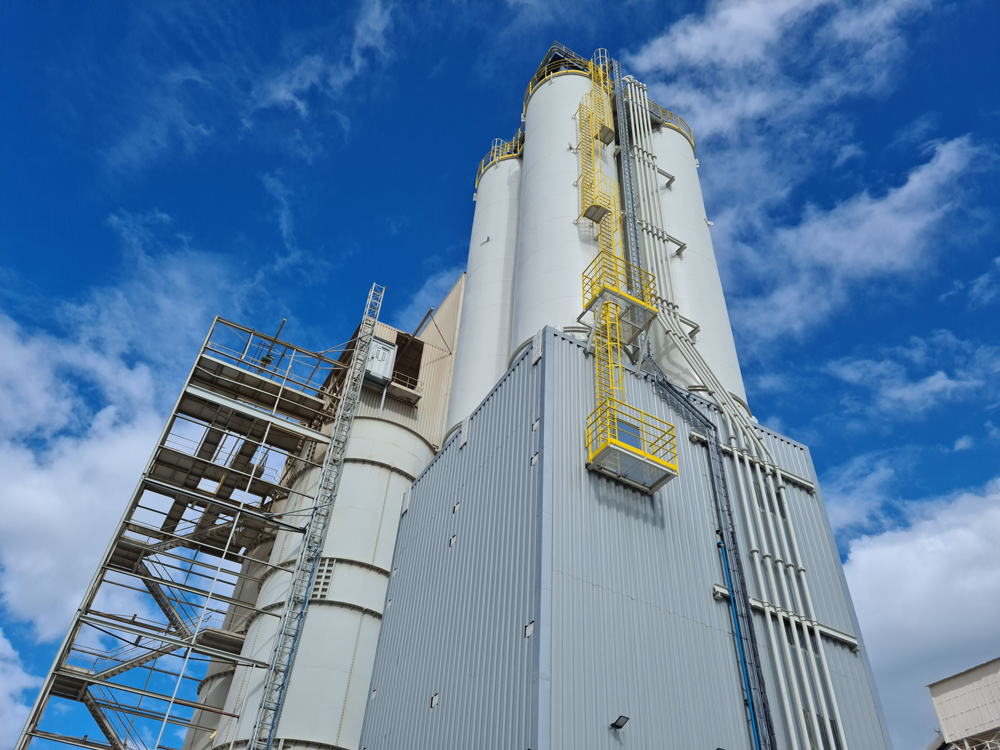
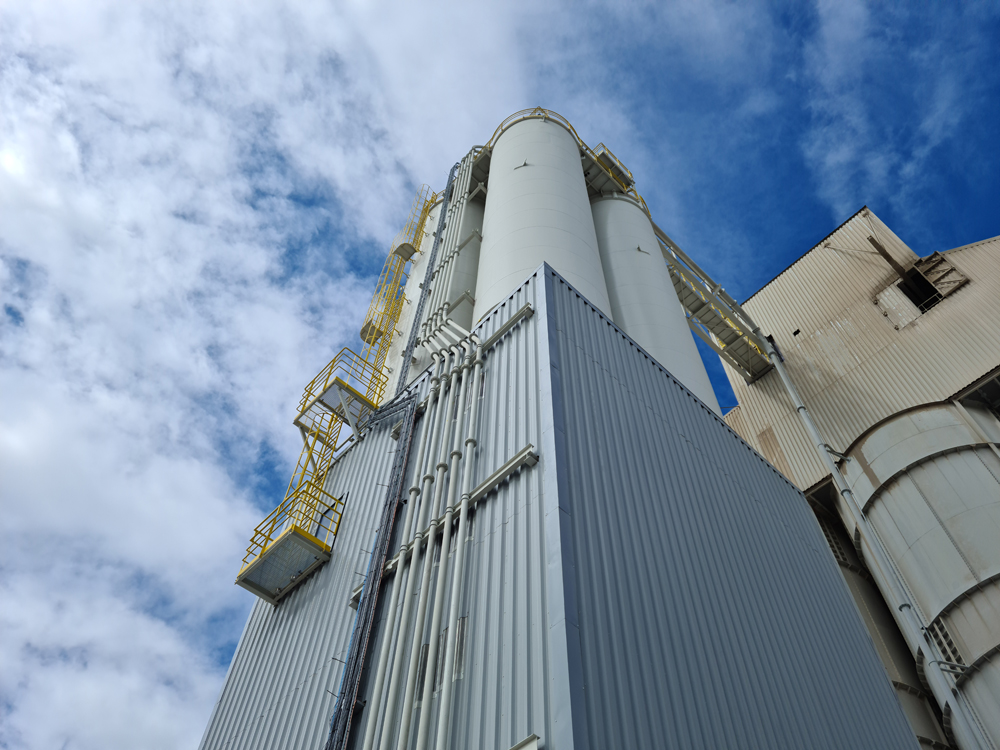
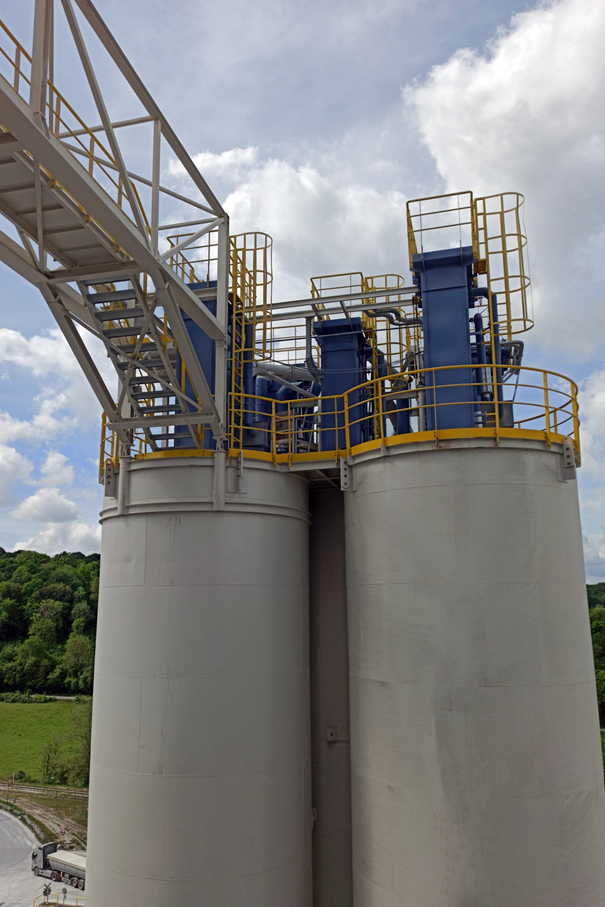
The installation consists of four steel tanks/silos with a capacity of 250 m3 each and one 80 m3 tank, which are a buffer warehouse for semi-finished products. The silos are not insulated. Protection against weather conditions is a paint coating in the form of an epoxy primer and polyurethane topcoat made in the minimum C3 (ultimately C4) anti-corrosion class. Of course it is possible to insulate the tanks/ silos.
Each silo (buffer tank) is equipped with a highly efficient bag dust collector with a capacity of up to 2500 m3/h installed directly on the roof of the silo. The standard equipment of the tank here is a device continuously measuring the amount of material carried out. For this purpose radar sensors, as well as minimum and maximum level sensors were used. Breather valves acting as safety valves were also installed.
Each of the silos is equipped with an unloading support system in the form of a mechanical activator mounted in the cone directly above the outlet. It fulfills a key task when emptying the silo, eliminating the risk of lumping and wedging of the material at the outlet, and causing more even outflow. The activator is working when the material is collected, but its design and the type of used drive allows continuous operation if necessary. Semi-finished products (raw materials) are loaded into buffer tanks from road tankers (each buffer tank has its own loading installation).
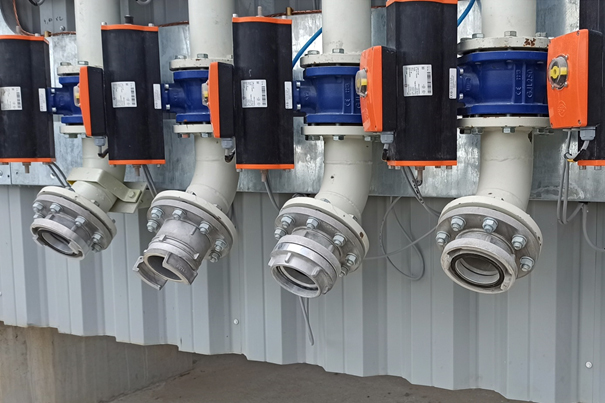
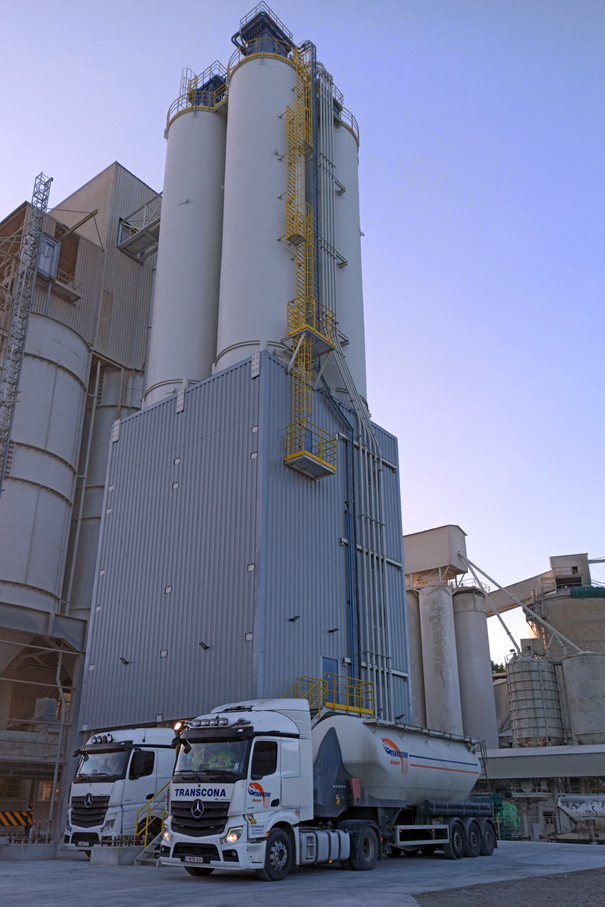
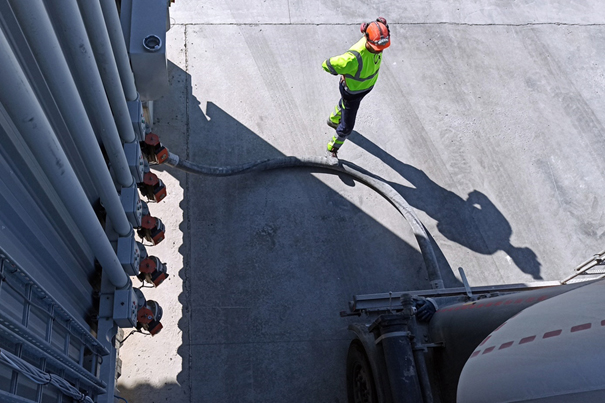
The road tanker operator drives up to the appropriate silo loading connector indicated by the system. After connecting the flexible hoses and determining the readiness for unloading (reaching the appropriate pressure in the tanker), unloading begins fully automatically. The unloading process can be:
– interrupted or suspended by the driver at any time,
– interrupted by the system when the silo is overfilled or when an emergency condition occurs on the installation
The installation is operated by the drivers themselves, obviously the installation can also be supervised by the operator, but it is not necessary. This allows a significant reduction in human labor costs while maintaining higher production precision. Cutting costs and automating production processes is currently one of the necessary elements of the functioning of a contemporary and modern company / modern plant.
The heart of the facility is the weighing and dosing system of appropriate portions of semi-finished products from buffer tanks. The mixture production system works in batches, not continuously, which also affects the high accuracy of preparing the required amount of the mixture. There is no need to buffer the finished product in additional buffer tanks, because the risk of overfilling the tanker is very small.
All processes that are performed inside the installation, at the stage of machine design, have been first digitally simulated using the Rocky software based on DEM (discreet element method).
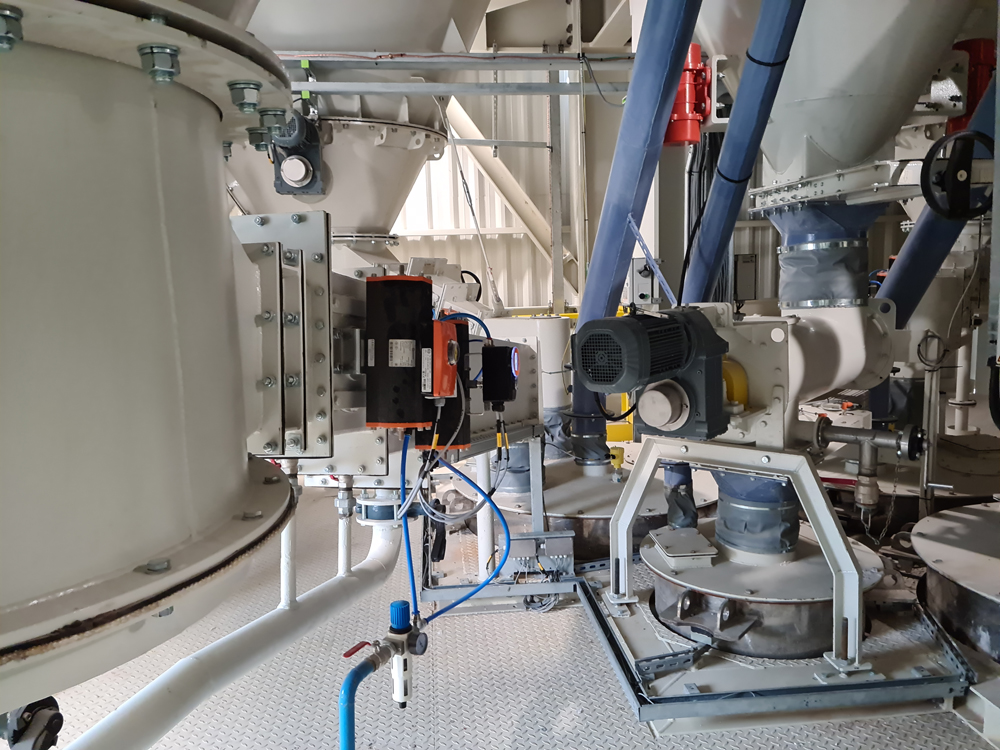
The dosing systems (under each silo) are based on two drum gate valves: the first cut-off valve, the second regulating flow valve equipped with a pneumatic digital positioner. Material in the form of semi-finished product is dosed from individual silos through aeration chutes to weighed tanks with a capacity of 3,00m3 each.
Filling is carried out in randomly, but first in order is always emptied the tank from a given batch, which contains the material with the highest percentage share in the composition of the mixture.
The weighed doses are dumped from the weighing buffers directly into the 3.65 m3 batch mixer in the correct order as this has a significant impact on the quality of the mixture. The mixing process takes about 1 minute after which the finished product goes to the continuous mixer installed below, integrated with a buffer with a capacity of 4,00m3.
The continuous mixer, thanks to the reversible screw conveyor, transports the product to the selected loading station (1 of 2).
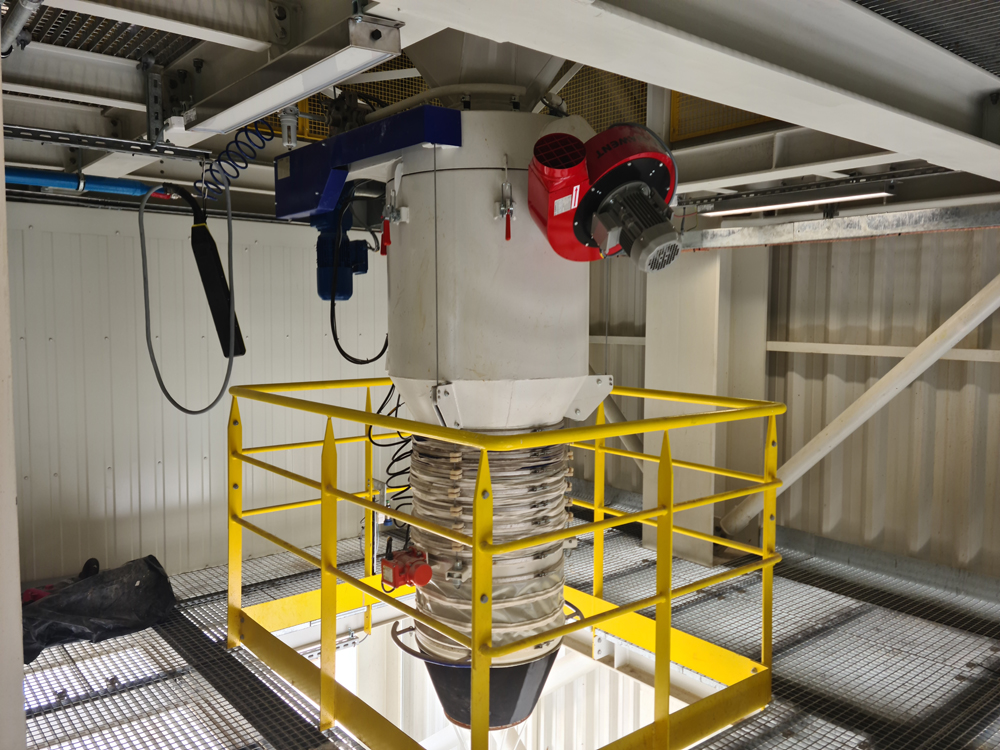
The loading point is a 2-axis positioner with a loading sleeve equipped with a central cartridge dust collector. The operating range of the positioner is ±500mm for the X axis and ±150mm for the Y axis. This allows the loading chute to be positioned centrally in relation to the axis of the road tanker hatch, which has a positive effect on the durability of the sleeve components and the ease of maneuvering the road tanker truck within the loading berth.
The entire loading process is carried out dust-free thanks to the use of a high-performance bag dust collector with a capacity of 3000 m3/h, which collects dust from weighed tanks as well as from batch and continuous mixers.
The installation has three operation stands for road tankers. One unloading and two loading operation stations. This enables simultaneous unloading of a road tanker into buffer tanks (250 m3 each) and loading of another road tanker with the finished product, however, it is not possible to load two road tankers at the same time. This is dictated by the complexity of the production process of the finished mixture.
The road tanker driver who delivers the raw material/semi-finished product places the tank truck on the appropriate loading station, then scans the QR code or manually enters the product number, it determines to which of the silos (buffer tanks) the material from the road tanker can be loaded into. The driver connects the road tanker with a flexible hose to the unloading pipeline leading to the silo indicated by the system. Then reports the proper connection of the road tanker and the readiness to unload by pressing the appropriate-illuminated button on the local control panel.
The unloading process is carried out automatically, first the filter on the roof of the filled tank is activated, then the pneumatic gate opens, which allows the material to be transported from the road tanker to the buffer tank. Unloading is stopped with the illuminated “stop” button, then the valve closes and the filter continues to work for a while (about 10 minutes). For unloading, the driver uses only his own compressor, because the installation does not have a compressed air connection with appropriate parameters for pneumatic transport. Depending on the type/size of the compressor installed on the vehicle, the unloading time may vary, but should not exceed 40 minutes. The transport installation has been designed in such a way (with such a reserve) that at the end of unloading can take over the entire amount of air stored in the tanker under a pressure of 2 bar. Thanks to this, you can almost completely eliminate the risk of potential problems with dust pollution and soiling.
At the time of unloading it is also possible to load the finished product. The procedure of loading the ready mix is carried out in a similar way. The road tanker driver scans the QR code on the waybill (CMR) or manually enters the product number and amount. The system recognizes the quantity and composition of the mixture to be prepared.
After carrying out the procedure of setting the loading sleeve with the use of a positioner and confirming the readiness of its connection to the hatch of the road tanker, the ready mixture of the final product is prepared fully automatically. At first, the system checks the amount of semi-finished products in the buffer silos, then determines the number of portions to be prepared. Depending on the volume of the tanker and the quantity composition of a given mixture, it can be from a few to a dozen or so.
After completion of the production and loading, the installation stops (except for the process dust collector installed above the batch mixers, these stops working after 10 minutes, if the process of the next loading of the finished product has not started).
After the road tanker is loaded, the driver lifts the loading sleeve, which the system interprets as the end of the loading process. Then it is possible to leave the loading operating station and place in another road tanker or start loading at the adjacent stand
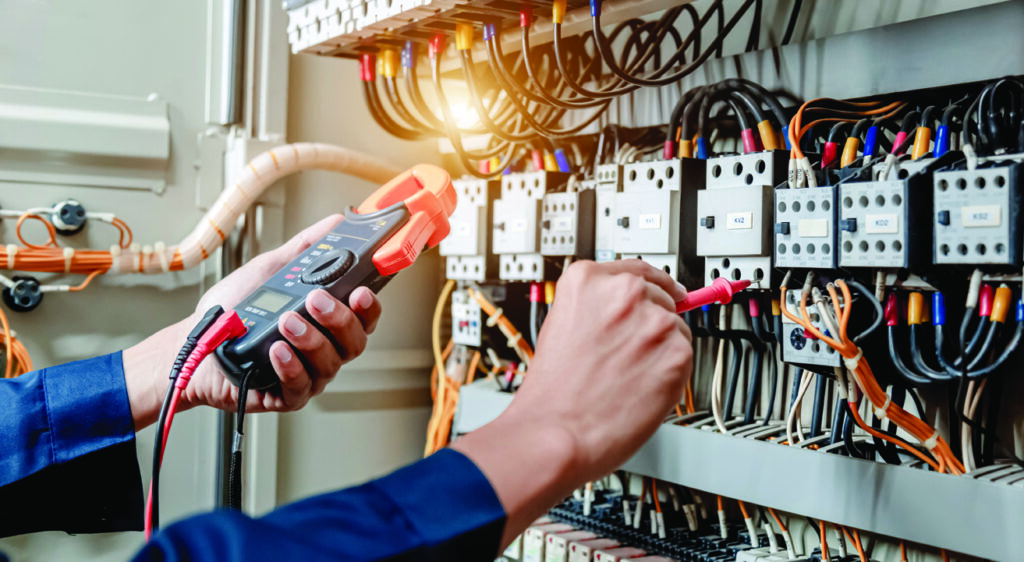

The Biko Tech installation requires an electrical connection and a compressed air system connection. The air may come from the existing plant installation, provided that it is properly drained, cleaned (de-oiled) and has a suitable pressure of a minimum 6 bar. When it comes to electricity consumption, the maximum load of the installation is 100-150 kW.
In this particular case, the control system was designed and made in accordance with the requirements and standards prevailing in our client’s company, as well as the entire installation software. The drives of the mixers are equipped with frequency converters, which allows speed regulation, and thus it is possible to regulate the level of mixing of the final product. Other drives are equipped with rotation control sensors 0.
The previously mentioned aspect is the full automation of the production process. Although by designing such automated installations, in theory, we deprive people of the ability to perform work, replacing people in the manufacturing industry allows to increase the efficiency of the installation, increase the quality of the final product and improve the safety of the employees, drivers or operators of the installation.
We seem to have forgotten the days when slide rules, typewriters and slide projectors were replaced by computers and modern software. We use computers and we are more productive thanks to them. Societies have accepted this kind of “automation” of production processes. However, the dynamics of introducing new technologies in industrial plants is different, that is why our installation, not requiring operators and people supervising its correct working at every stage, is so innovative.
Practically at every stage of the production procedure of loose material mixtures there is performed dedusting process with highly efficient bag dust collectors, the efficiency of which reaches 99.9%. Thanks to this, only air purified of the dust mixture is released into the environment and the atmosphere.
It was concluded that there is no possibility of a negative impact on the natural environment and on the health and life of humans and animals. The installation does not thermally transform any chemical substances, and complies with the emission standards of polluting substances set by the EU community law. The formal and legal criteria are different for different member states, however, the thesis that there is no negative impact on the natural environment is confirmed by the fact that after the installation and commissioning of the installation, no complaints from local residents were recorded, only positive results of air quality and noise measurements as well as emissions of harmful substances carried out by authorized institutions.
The global industrial giants have started the ecological revolution a long time ago. How do they care about the future of our planet? First of all, they take measures to reduce the production of harmful substances. At every stage of its activity, Biko Tech places great emphasis on ecology and zero-emission policy. We try to use recycled materials and have modernized our production plant in terms of green technologies and green energy. In the same way, we try to create devices manufactured for the needs of our customers.


Since the beginning of the existence of Biko Tech, we have specialized in introducing innovative and economical industrial technologies based on an optimized system of their management and operation to the market. A well-made, designed and configured industrial installation provides measurable benefits to our customers, especially in the era of rising energy prices and skyrocketing human labor costs.
When building process installations, we care not only about the quality of the devices, but also about assistance in their operation and service – both warranty and post-warranty.
Technologically advanced industrial systems, however, require highly qualified service / IT / automatic employees. We help our clients in various matters – both technical and economic at every stage of the investment, as well as after its acceptance and commissioning. We provide service, technological inspections and ongoing repairs of devices and technological lines manufactured by us.