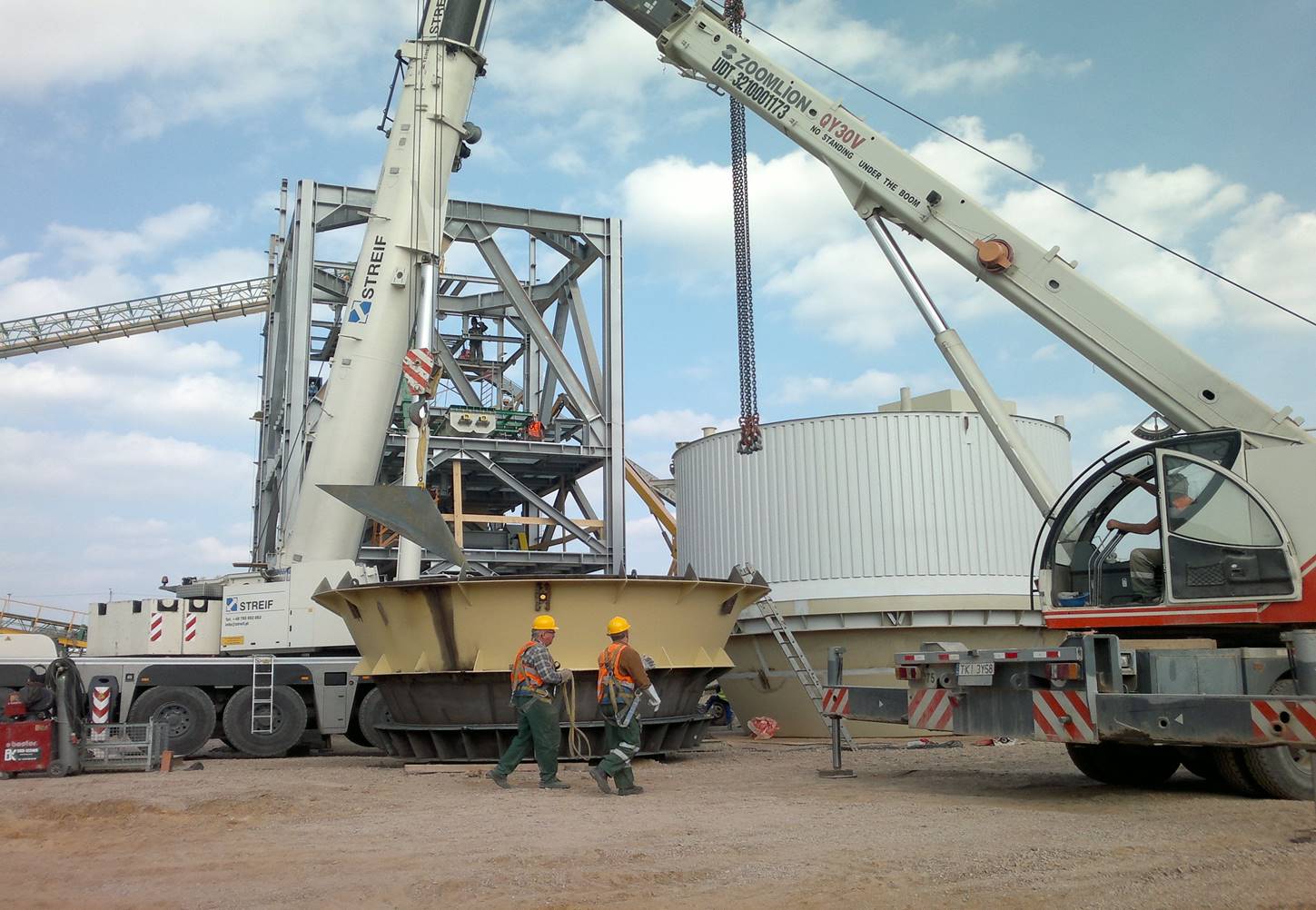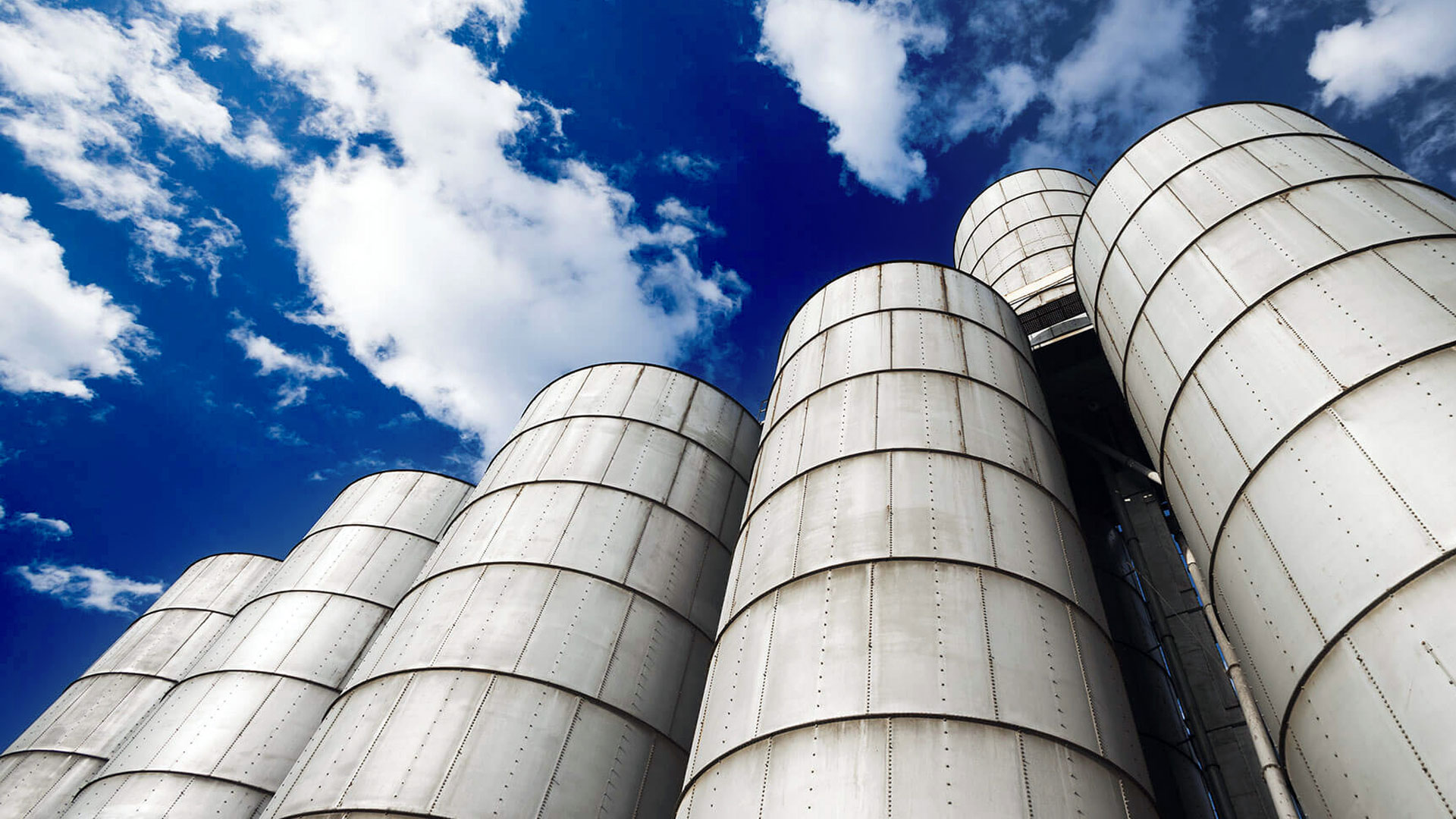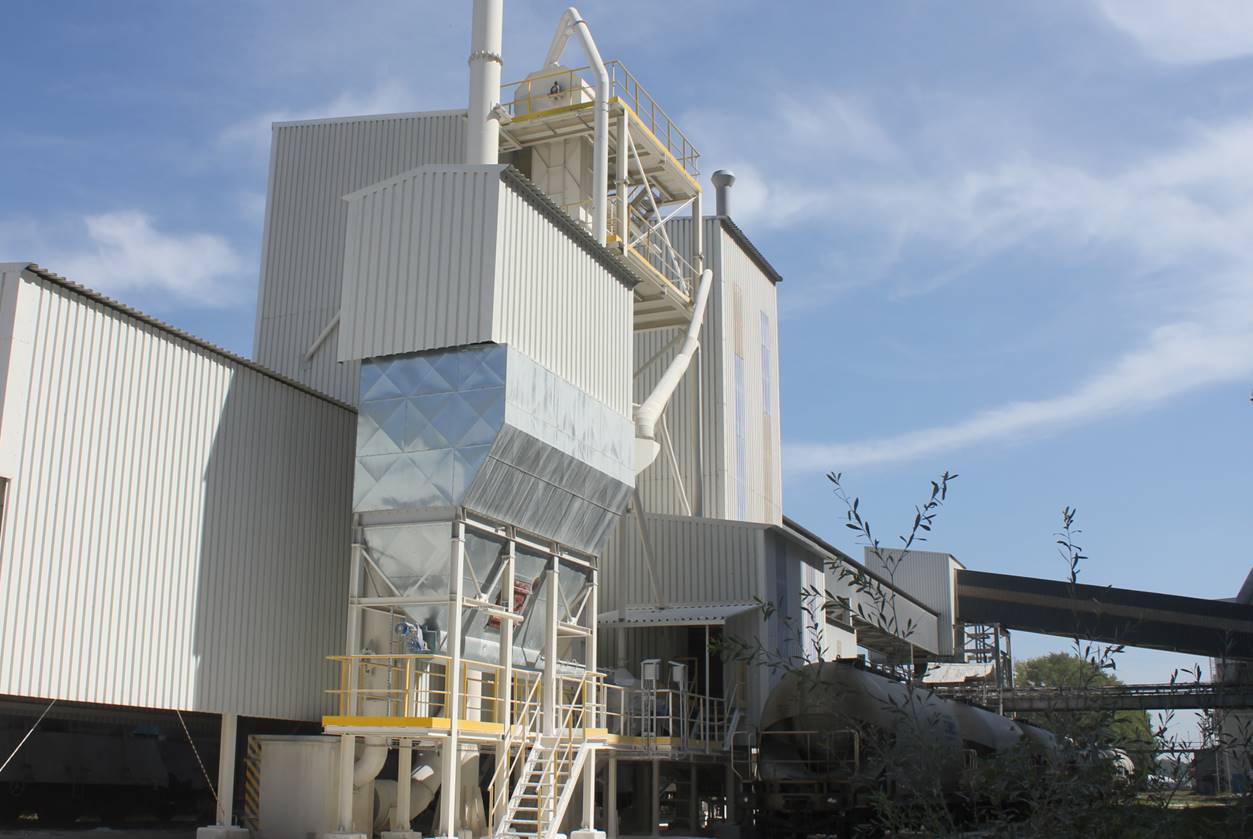
They are commonly used in almost all branches of industry and agriculture around the world. They are used for temporary or long-term storage, warehousing and warehousing of bulk and dry materials, product mixtures and granulated products. They are also ideal for storing agricultural products such as cereal grains, rapeseed, corn, etc. Silos are divided into flat-bottomed, funnel-shaped and tower-shaped. The greatest advantage of silos is the ability to store a large amount of materials while using a relatively small amount of space. Silos, due to the fact that in most cases their capacity is increased by vertical expansion, can be placed in places where it would otherwise be impossible. Silos are also very good protection for the goods stored in them. They provide protection against atmospheric factors and pests, but also provide adequate humidity and ventilation, which are very important factors when storing bulk products. Silos are very resistant to physical damage and, most importantly, fireproof, which is a very important feature of these structures. The solutions proposed by our company are tailored to the individual needs of the customer, we can offer the production and assembly of tanks of various sizes and shapes, made in one piece or assembled on site. We offer typical solutions optimized in terms of costs: fully welded and bolted, as well as non-standard tanks adapted to the material and production process.
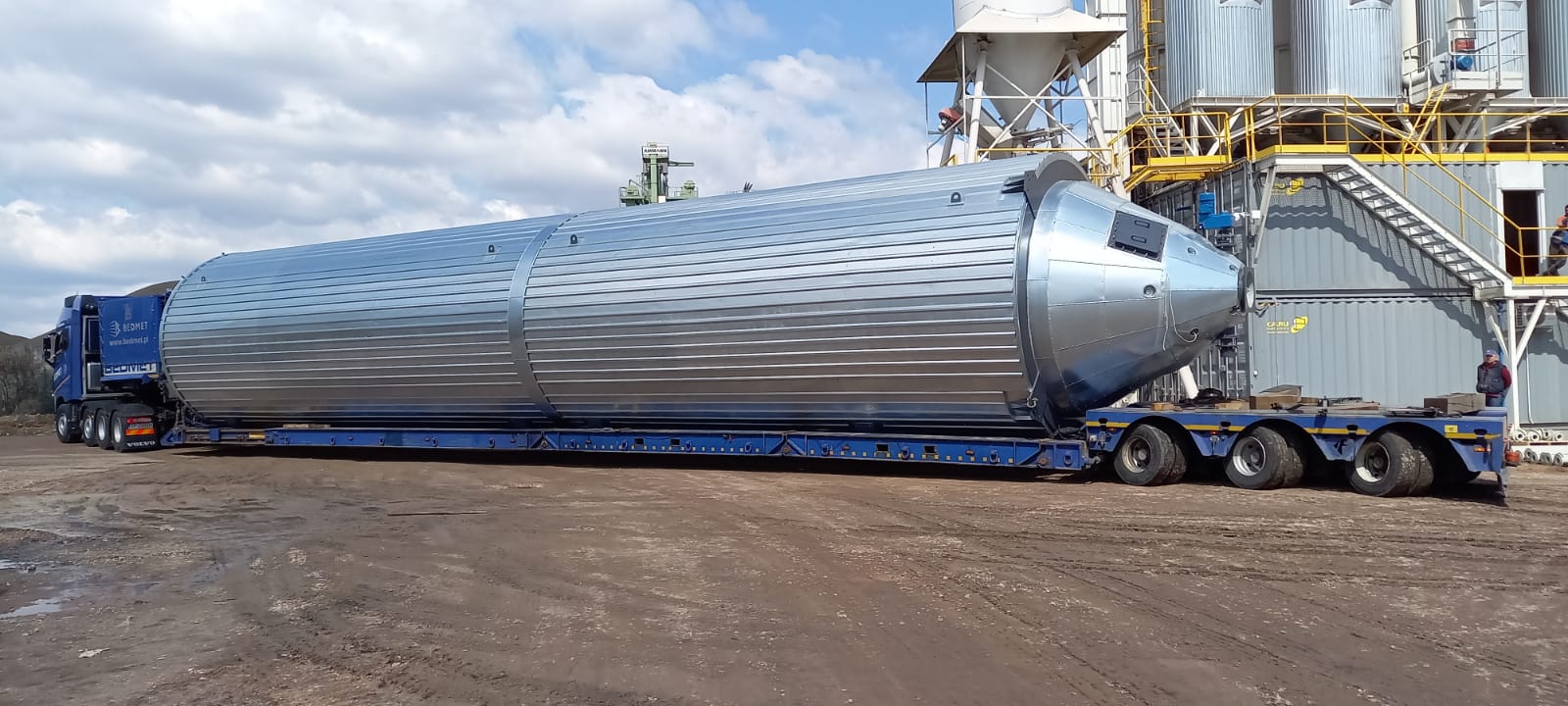
Storage silos are basic devices that are elements of industrial installations and are used to store bulk materials. Traditionally, vertical silos are used and are widely known, but in recent years an innovative solution has appeared – horizontal silos, which have also become mobile devices.For mobile concrete plants or other temporary projects that require flexibility and quick operation, a horizontal cement silo is an excellent solution. Moreover, horizontal cement silos retain all the basic functions of traditional vertical silos.
The mobility of a horizontal silo involves the ability to easily move the silo from one place to another. Horizontal silos can be easily transported using appropriate devices, such as car semi-trailers.
They are part of professional process lines. Process tanks, due to their group affiliation, have very different applications. They can also function as containers and buffer tanks – depending on the design, demand and purpose of the production line in a given industry. They can be used as stand-alone devices or as units of automated processes, e.g. mixers, heat exchangers, homogenizers, control units, dispensers, etc. Most process tanks are made of stainless steel, although everything depends on the requirements set by the customer. Options for hazardous environments are also available. Our products comply with the pressure directive and optionally with the ATEX directive for systems operating in explosion-hazardous environments.
Loading sleeves are widely used in the food, chemical, pharmaceutical and construction industries. These are devices with different capacities and operating speeds. We specialize in solutions that enable dust-free loading of bulk materials into barrels, tanks, semi-trailers of box vehicles, ships and storage heaps. The latter devices include telescopic loading sleeves with increased efficiency.
Our loading sleeves enable efficient and dust-free pouring of bulk materials for both transport and storage. It is possible to build an internal scale, positioners for three axes X/Y/Z, dust filters, a dust apron and support for filling the transport vehicle into the loading sleeve.
We only provide proven solutions, so you can be sure that the offered products will work in every situation and will serve you for many years.
The loading bellows positioner moves the loading bellows horizontally when loading trucks or railcars. The driver can stop the vehicle at the designated loading location without having to stand in the center of the loading area. Bellows equipped with positioners increase the speed and efficiency of loading and eliminate the need to move the vehicle after it has been parked in the area designated for loading.
These are solutions for difficult products and are based on mechanical shaking of the discharge zone. These devices are used to mechanically support the discharge from silos. The system is easy to use thanks to the transfer of serviceable elements to the outside of the cone. The smooth internal surface additionally supports the correct discharge of material. Each installation is individually analyzed in terms of the required flow and parameters of the discharged material.
BIG BAG bags, also known as large-size bags, are flexible containers made of polypropylene fabric. Big Bag stations are used in many groups and sectors of industry and construction. The process of unloading raw materials in production plants is carried out using special stations adapted to large and heavy Big Bag bags.
The stations can be used for both unloading and loading of bulk or granular raw materials, in a dust-free manner. In large-size bags, you can transport and store both fine and bulk products intended for the food industry, granulates and substrates used in the chemical industry, and all types of waste or bulk construction materials.
This allows for perfect adaptation of their equipment to the process conditions, product characteristics and specific requirements presented by the Customer. Big Bag stations manufactured by Biko-Serwis are designed and constructed taking into account all the needs of our customers.
Appropriate docking systems – from standard, designed for safe bulk products, designed to protect the production area from dust, to specialist systems protecting against highly active substances requiring process isolation to ensure the safety of both the product and employees. Our stations are characterized by high efficiency and reliability.
Using a Big Bag station speeds up processes and minimizes the need to engage many production workers. A Big Bag unloading station is a chance to streamline your production line.
Quality control of production processes, as well as testing the quality of final products, is essential to maintain the repeatability and quality of manufactured substances. Cyclic sampling of raw materials performed using samplers during production is essential to perform laboratory analysis of the characteristics of the collected material. Based on the results of quantitative and qualitative tests of substances, the quality of the tested sample is determined and in the longer term, a decision is made whether a given batch of the product meets specific requirements and standards, and whether the production process should be corrected. Samplers are designed to work in many industries: food, chemical, cosmetics, pharmaceutical, cement, refinery and others.
Sampling of bulk materials can be carried out in various ways, depending on the type of technological process and the type of material to be sampled. At the moment, two main categories of sampling can be distinguished: manual and automatic, usually carried out using electrically powered devices. Each of the options listed has advantages and disadvantages, it is worth considering which method to choose on your own technological line.
Manual sampling of materials is certainly the cheapest solution, although it is not the best solution and, paradoxically,… cheap. Why? Manual sampling requires the operator to stop production and restart the entire production installation. Manual sampling therefore forces downtime, which generates significant costs.
In contrast, an automatic sampler (suitably selected for a specific application) is a solution that eliminates the costs of generating production line downtime and reduces the risk of accidents at work. The representativeness of the sample and the reliability of laboratory test results are also significantly increased in such a case. Automatic samplers manufactured by BIKO-SERWIS can be installed both in transfers and storage tanks.
The basic method of cutting off the flow of bulk materials can be manual, pneumatic or electric.
The BKBB 300 Big-Bag loading station ensures safe, efficient and dust-free filling of bags with bulk or granular material with minimal employee involvement, while being easy to install, operate and maintain.
We manufacture loading stations from carbon steel and stainless steel, easily adapting to a wide range of materials and bag sizes. At the customer’s request, we can manufacture a station adapted for use in explosion-hazardous areas (ATEX).
Reloading bulk materials from Big-Bag bags to tank wagons is an important process in the cement, lime-plaster, chemical and food industries, as well as in companies dealing with transport, recycling and storage. Thanks to our BKRB reloading devices, this process can be significantly facilitated and accelerated. We manufacture Super Sack reloading devices of various heights in stationary and mobile versions, made of black and stainless steel. The mobility of the station allows the reloading of material from bags to tank cars in various places, both indoors and outdoors, and the material of the device allows us to adapt it to the ambient conditions. Stainless steel reloading stations are resistant to corrosion, chemical (corrosive) substances, as well as to water cleaning. We also manufacture reloading devices for use in ATEX zones.